Have you heard of Fixed, Mobile, and Satellite Convergence (FMSC) before?
Fixed, Mobile, and Satellite Convergence (FMSC) is redefining connectivity by unifying terrestrial and non-terrestrial networks into a single intelligent system—ensuring seamless service continuity anywhere on Earth.
As each network type brings unique advantages and trade-offs: for example, fixed networks offer high capacity and stability but are limited in coverage, mobile networks provide mobility and flexibility yet still face coverage gaps, while satellite networks ensure global coverage—even in remote areas—but come with higher latency and cost; this is why combining them through convergence is key to delivering seamless, always-on connectivity.
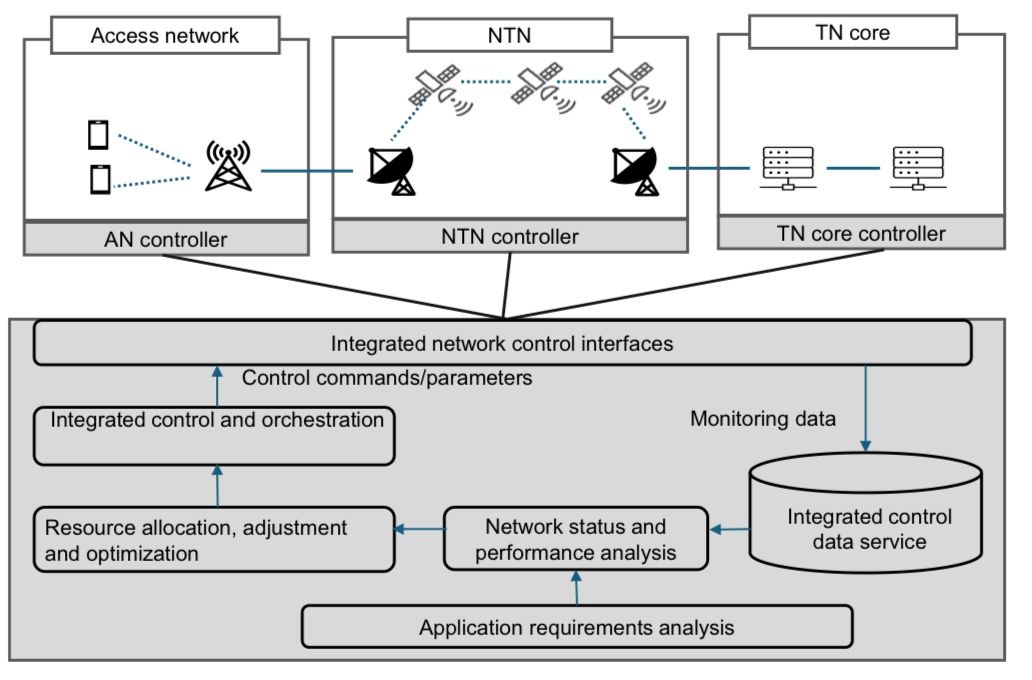 Based on recent research published in the ITU Journal on Future and Evolving Technologies, an experimental system has been developed to validate the Integrated Network Control Architecture (INCA) framework.
Here are the key takeaways from the study:
- Dynamic Convergence: The system successfully bridges 5G mobile networks, fixed data networks, and satellite segments into a unified control system.
- AI-Driven Optimization: By leveraging Machine Learning models, the system can analyze network monitoring data, predict resource demands, and dynamically adjust bandwidth in real-time.
- Uninterrupted Quality of Service (QoS): During experimental testing, the architecture automatically allocated extra satellite bandwidth during network congestion to seamlessly maintain High Definition (HD) video streaming.
This is a good step forward for Fixed, Mobile, and Satellite Convergence (FMSC).
This framework provides a standardized path for operators to offer seamless roaming and service continuity across the globe, ensuring that “dead zones” become a thing of the past.