
Most people see 5G as higher throughput. However, Engineers see something deeper: the SDAP layer (Service Data Adaptation Protocol) — a new 5G protocol that fundamentally changes how QoS is handled on the air interface. We talk a lot about monetizing 5G, but we rarely look at the mechanics that actually make it possible.
TE lived in a bearer-centric world. If you needed a specific QoS (QCI), you created a dedicated bearer. Simple, stable, and standardized — but inflexible. However, 5G changes the game.
Today’s networks must support Mission-Critical IoT, Cloud Gaming, and VoNR simultaneously. Creating a new bearer for every service requirement would explode signaling and kill efficiency.
This is where the 5G QoS Flow (5QI) model becomes the real breakthrough. Instead of managing tunnels, we manage flows.
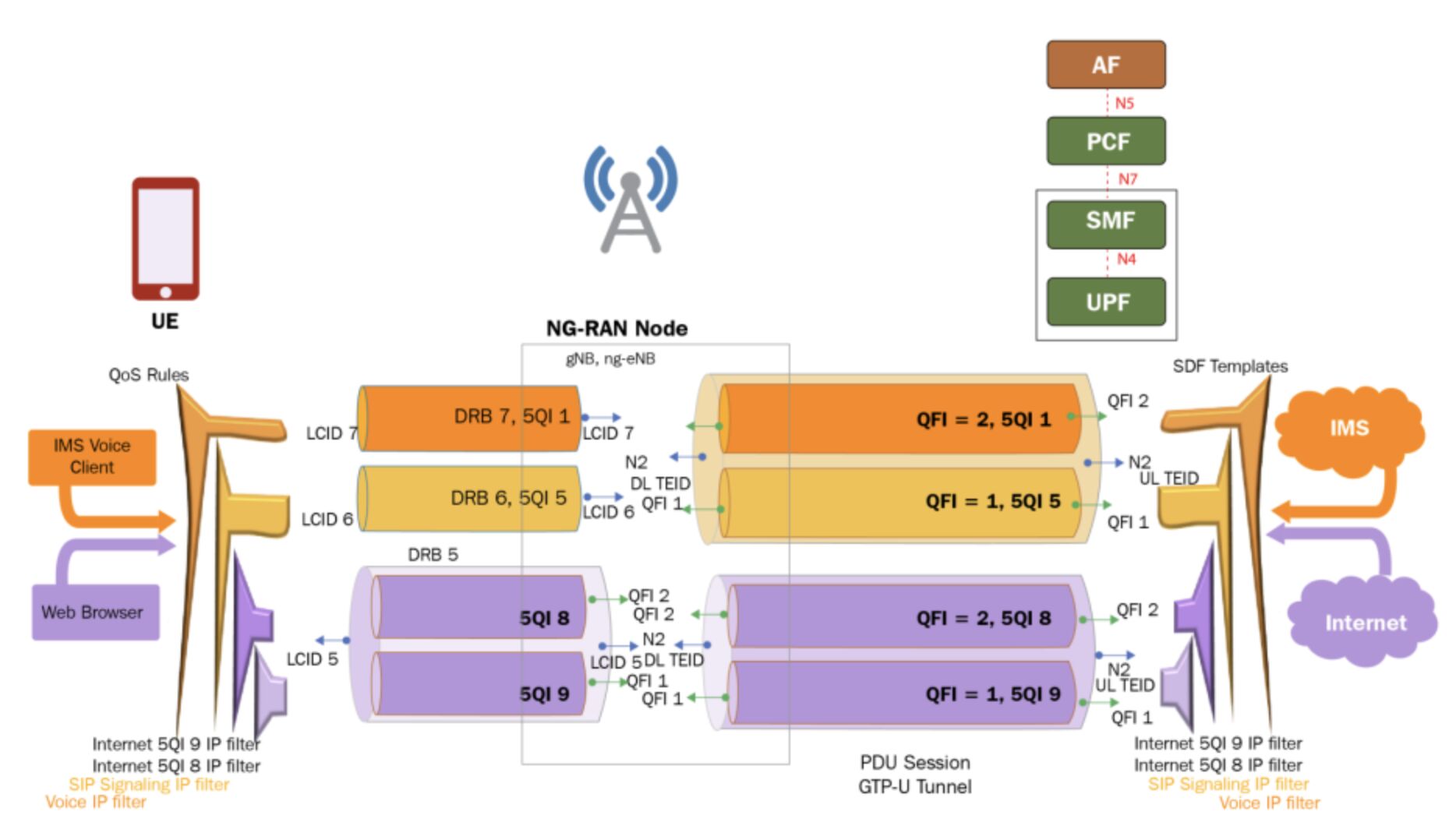
- QFI (QoS Flow Identifier)
Traffic is classified at the packet level and tagged with a QFI at the UE and the UPF, according to QoS rules. - Intelligent Multiplexing (The Game Changer)
The gNB dynamically multiplexes multiple QoS flows — for example:
5QI 8 (video) and 5QI 9 (web) into a single Data Radio Bearer (DRB) while still enforcing different latency, priority, and reliability requirements.
In 4G, this often required separate bearers. In 5G, the radio can group multiple flows with similar requirements into a single radio bearer to reduce signalling overhead, while still treating them differently in the core network. This shift is the technical foundation for Network Slicing and GSMA Open Gateway, which expose “Quality on Demand” APIs to applications.
5G is not just about moving data faster. It’s about moving data smarter.