
It seems I can't find what you are looking for.
You might be interest with my other content
It seems I can't find what you are looking for.
You might be interest with my other content

A key challenge in moving from 5G to 6G is that operators must introduce a new radio technology while still supporting millions of existing 5G devices. That is why 5G–6G Multi-RAT Spectrum Sharing (MRSS) is especially important. The fundamental concept is simple: 5G and 6G can share the same spectrum dynamically, so operators can gradually […]

Most markets still rely on 5G Non-Standalone (NSA) as the main approach for commercial 5G. This setup allows operators to activate new radio (NR) capacity over an existing LTE core, avoiding a complete overhaul to a standalone (SA) core. However, NSA’s architecture, based on 3GPP’s EN-DC option, introduces a structural asymmetry: downlink throughput increases rapidly, […]

In my last conversation with a friend (not in the tech domain), he asked whether I should turn on 5G Standalone on my iPhone and whether I would notice a difference. This is the most common question we are discussing every day in the industry: reality vs. theory. But the main question I asked my […]
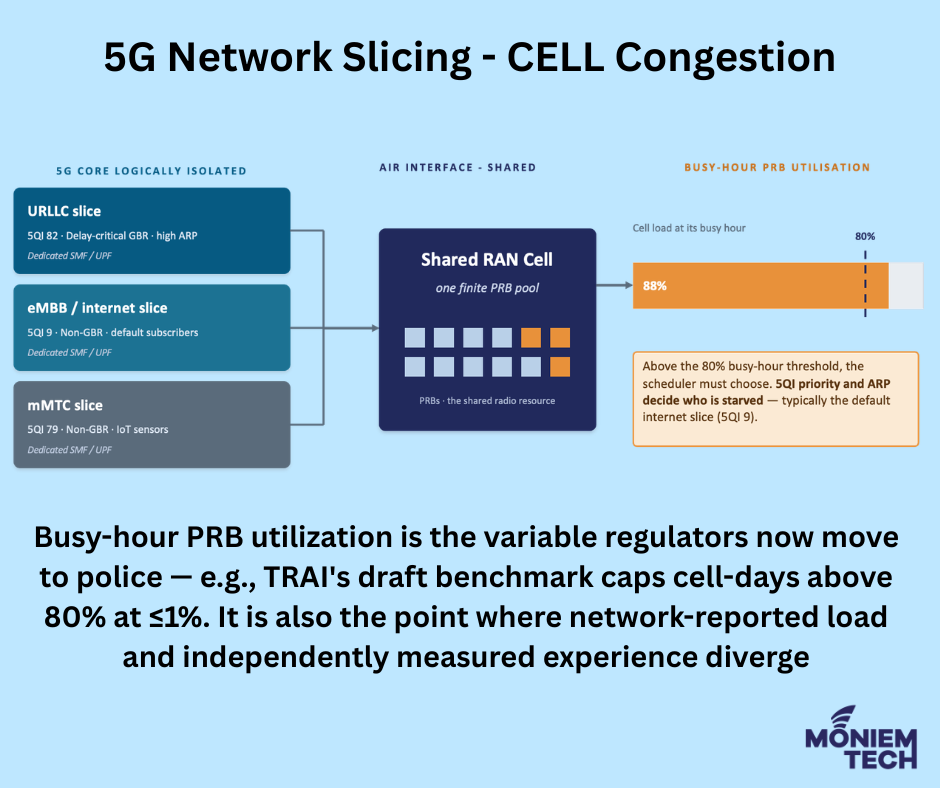
Network slicing is the key feature that validates the 5G Standalone core. However, if deployed on congested radio, it could disrupt the public internet. India’s telecom regulator has addressed this issue in draft legislation. This is an appropriate time to revisit the fundamentals: what a slice is at the protocol level, how 5G enforces quality […]
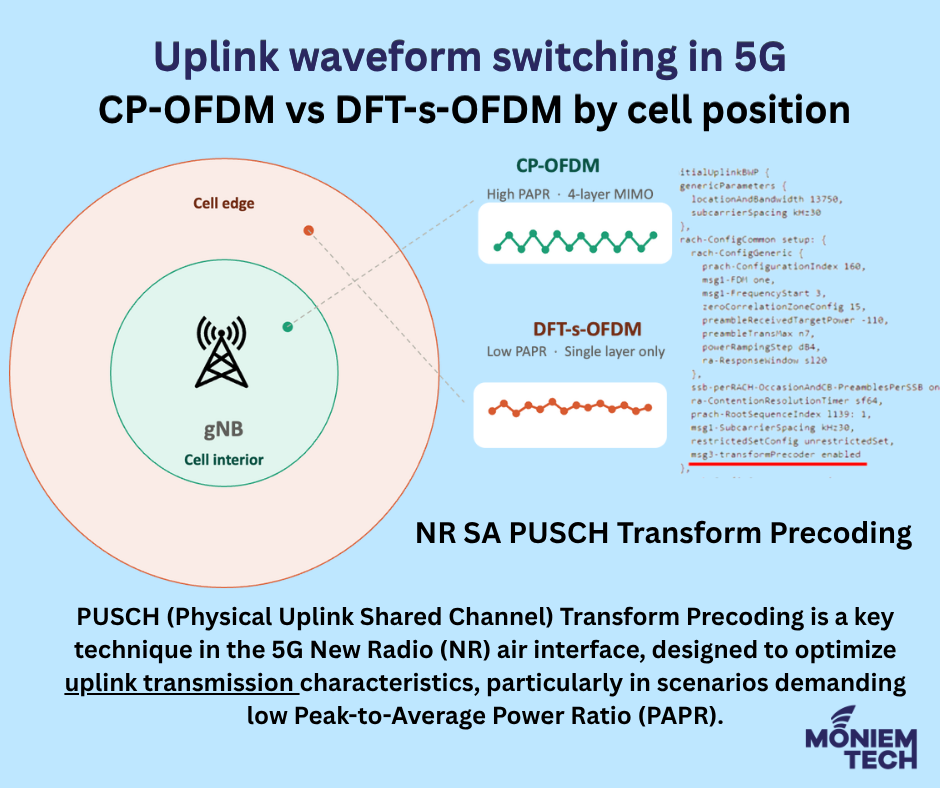
The design question 3GPP actually faced LTE’s uplink was a single, non-negotiable decision: every PUSCH transmission uses SC-FDMA. 5G NR does not make that same trade-off unconditionally — it exposes the choice as a per-configuration parameter. That’s a more interesting design decision than “5G moved to OFDM,” and it’s worth understanding why 3GPP declined to […]